
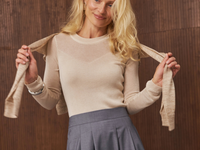

¿Qué es la viscosa? Por qué es perfecta para la primavera, y no solo para el verano
La viscosa suele etiquetarse como un “tejido de verano”. Ligera, transpirable y suave: suena estacional. Pero esa idea está incompleta.
En realidad, la viscosa es una de las fibras más versátiles de los textiles modernos. Según su peso, tejido y mezcla, puede funcionar muy bien en primavera, temporadas de entretiempo e incluso en conjuntos de otoño con capas.
Veamos con más detalle qué es realmente la viscosa y por qué los tejidos de algodón y viscosa son especialmente útiles para los armarios de primavera.
¿Qué es la viscosa?
La viscosa (también conocida internacionalmente como rayón) es una fibra de celulosa regenerada elaborada a partir de material vegetal natural, normalmente pulpa de madera. La celulosa se procesa para obtener una fibra suave y lisa que reproduce algunas cualidades de tejidos naturales como la seda y el algodón.
Características principales de la viscosa:
origen vegetal
superficie lisa
excelente caída
estructura transpirable
buena absorción de humedad
Aunque pasa por un proceso industrial, su materia prima base es celulosa natural, lo que contribuye a su comodidad y suavidad.
El gran malentendido: “La viscosa es solo para verano”
Muchas personas asocian la viscosa exclusivamente con vestidos y blusas ligeras de verano. Aunque funciona especialmente bien con calor, la propia fibra no está limitada a una sola estación.
La realidad es que: el comportamiento de la viscosa depende de su peso y de cómo está tejida.
El peso del tejido importa
La viscosa ligera y de tejido abierto se siente aireada y fresca, ideal para climas cálidos.
Los tejidos de viscosa de peso medio o más densos se sienten más sustanciales y pueden aportar una calidez suave cuando se llevan en capas.
Esto significa que la viscosa puede funcionar como:
tejido transpirable de verano
punto suave de entretiempo para primavera
capa base cómoda en meses más frescos
La estacionalidad de la viscosa depende más de la construcción del tejido que del tipo de fibra.
Por qué la viscosa es especialmente buena para primavera
La primavera es impredecible. Mañanas frescas, tardes cálidas y humedad cambiante: los tejidos deben poder adaptarse.
1. Transpirabilidad durante cambios de temperatura
La viscosa permite circular el aire y absorbe la humedad con eficacia. Esto puede ayudar a mantener la comodidad al pasar de interiores a exteriores.
2. Respuesta a los cambios de temperatura
Como la viscosa absorbe bien la humedad, puede ayudar a sentirse más fresca con calor y también funciona bien bajo otras capas cuando baja la temperatura.
3. Ideal para llevar en capas
Un top de viscosa funciona bien debajo de:

chaquetas ligeras
blazers estructurados
prendas de punto
Crea una capa base suave sin añadir volumen.
Por qué algodón + viscosa es una combinación inteligente para primavera
Mezclar viscosa con algodón puede complementar las cualidades de ambas fibras.
El algodón aporta:
estabilidad estructural
durabilidad
retención de la forma
practicidad cotidiana
La viscosa aporta:
suavidad
caída fluida
textura lisa
mayor flexibilidad
Juntas crean un tejido que:
puede sentirse más suave que el algodón puro
puede conservar mejor la forma que la viscosa pura
se adapta bien al clima de entretiempo
mantiene una apariencia refinada sin sentirse pesado

Por eso los jerséis, tops de manga larga, cárdigans y vestidos suaves de algodón y viscosa son especialmente adecuados para armarios de primavera.
Cómo se comporta la viscosa en las prendas
Entender cómo se comporta la viscosa ayuda a explicar su versatilidad.
Caída y movimiento
La viscosa cae de forma natural. Crea líneas verticales limpias y siluetas suaves, por lo que funciona bien en formas relajadas y modernas.
Superficie lisa
La fibra tiene un tacto sedoso sin demasiado brillo, lo que da a las prendas un aspecto pulido pero discreto.
Absorción de humedad
La viscosa absorbe la humedad con más eficacia que muchas fibras sintéticas, lo que puede aumentar la comodidad en condiciones húmedas.
La construcción del tejido influye en el rendimiento
Un tejido de viscosa denso, ya sea de punto o tejido, se siente distinto a una versión ligera y aireada. Por eso un jersey de viscosa puede sentirse estructurado mientras una blusa de viscosa cae de forma más fluida.
¿Es la viscosa adecuada para piel sensible?
Debido a la superficie lisa de sus fibras, la viscosa suele generar menos fricción sobre la piel que materiales más ásperos. Mezclada con algodón, a menudo se siente suave y agradable, algo especialmente útil en temporadas de transición cuando la piel puede estar más reactiva después del invierno.
Perspectiva de sostenibilidad
La viscosa procede de celulosa vegetal renovable. Sin embargo, su impacto ambiental depende en gran medida de un abastecimiento responsable y de los procesos de fabricación empleados.
Cuando se produce bajo estándares controlados y con sistemas modernos de filtración, la viscosa puede servir como alternativa a fibras completamente sintéticas.
Reflexiones finales
La viscosa no es solo un tejido de verano.
Su comportamiento depende de:
peso del tejido
densidad del tejido
mezcla de fibras
forma de estilizarla
Especialmente en primavera, los tejidos de algodón y viscosa ofrecen una solución equilibrada:
transpirables
suaves
estructurados pero fluidos
adaptables a las capas
cómodos con temperaturas cambiantes
Al elegir prendas para primavera, la composición importa tanto como la silueta. Entender cómo se comporta la viscosa ayuda a crear un armario que pase con más facilidad de una estación a otra.