
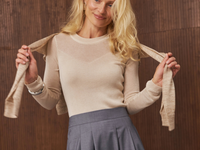

Cómo vestirse para temperaturas de 40 a 60 °F sin sobrecalentarse
El tiempo primaveral entre 40–60°F (4–15°C) es impredecible. Las mañanas pueden ser frías, las tardes se calientan rápidamente y la calefacción interior o el sol pueden hacer que tengas demasiado calor en pocos minutos.
La solución no es llevar menos ropa. Es usar capas de forma más inteligente, especialmente cuando se trata de prendas de punto.
A continuación encontrarás una guía práctica centrada en los tejidos para vestirte con comodidad en entretiempo sin abrigos voluminosos ni cambios bruscos de temperatura.
Por qué es tan difícil vestirse con 40–60°F
Este rango de temperatura crea tres problemas habituales:
❄️ Mañanas frías, especialmente por debajo de 45°F
☀️ Más calor al mediodía por la exposición al sol
🏢 Exceso de calor en interiores como oficinas, cafeterías o transporte
Los jerséis gruesos de invierno retienen demasiado calor. Los tops muy finos pueden dejarte con frío a primera hora.
El objetivo es aislamiento controlado + transpirabilidad.
La fórmula de 3 capas para el entretiempo
En lugar de prendas gruesas de invierno, prueba esta estructura:
1. Capa base: transpirable y próxima a la piel
Elige:
Algodón
Merino ligero
Punto fino acanalado
Mezclas suaves de modal
Evita:
Forro polar grueso
Sintéticos pesados que retienen la humedad

2. Capa de punto estructurada para controlar la temperatura
Aquí es donde muchas personas se equivocan.
En lugar de jerséis muy voluminosos, elige:
Cárdigans de punto denso
Polos de punto estructurado
Jerséis de peso medio con lana
Vestidos de punto con prendas exteriores ligeras
Los tejidos de punto densos ayudan a regular mejor la temperatura porque:
conservan el calor sin demasiado volumen;
permiten una circulación de aire más uniforme;
mantienen mejor la forma.

3. Capa exterior ligera: opcional y fácil de quitar
Para mañanas por debajo de 45°F:
Gabardina
Abrigo ligero de lana
Chaqueta cropped
Sobrecamisa
Al mediodía puedes quitar esta capa y seguir cómoda con el punto.
Por qué algunos jerséis provocan exceso de calor
El sobrecalentamiento suele deberse a:
Hilados con mucho acrílico
Interiores gruesos y cepillados
Punto muy suelto y voluminoso
Poca circulación de aire en la estructura del tejido
Las fibras naturales como merino, alpaca o los hilados con lana suelen regular el calor de forma más gradual.
Esto no significa que “más fino = mejor”.
Significa que la densidad y la calidad de la fibra importan más que el grosor por sí solo.
Fórmulas de outfits para 40–60°F
Look 1: mañana a 45°F — día de oficina
Capa base de punto fino
Cárdigan estructurado
Pantalón de vestir
Gabardina ligera

Quita la gabardina al mediodía.
Look 2: 50–55°F en la ciudad
Polo de punto o jersey ligero
Vaqueros rectos
Zapatillas o mocasines
Bufanda o accesorio con capucha opcional

Look 3: 60°F en un día de viaje
Vestido de punto suave
Chaqueta ligera
Zapatos planos cómodos
Ideal para aeropuertos donde la temperatura cambia con frecuencia.
¿La lana es demasiado cálida para primavera?
No necesariamente.
Los hilados modernos con lana pueden:
regular la temperatura;
permitir transpirabilidad;
adaptarse bien a los cambios entre interior y exterior.
La clave está en:
evitar puntos de invierno demasiado pesados;
elegir tejidos estructurados de peso medio.
Estrategia de armario cápsula para primavera
Para el entretiempo, normalmente basta con:
1 capa base ligera de punto
1 cárdigan estructurado
1 jersey de peso medio
1 vestido de punto o polo
1 capa exterior ligera
Esto reduce la sobrecarga del armario y ayuda a evitar vestirse de más.
Errores habituales al vestirse en entretiempo
- Llevar jerséis gruesos de invierno “por si acaso”
❌ - Saltarse las capas y pasar frío por la mañana
❌ - Elegir tejidos sintéticos que retienen el calor
❌ - Llevar punto oversize muy voluminoso bajo abrigos entallados.
Reflexión final
Vestirse para el entretiempo no consiste en llevar menos, sino en usar capas construidas de forma inteligente.
Cuando el punto es estructurado, transpirable y tiene un buen ajuste, se convierte en una de las piezas más versátiles del armario de primavera.