Women’s Winter Knitwear Guide: Fabrics, Fit & Layering
Winter knitwear can provide warmth, texture, and versatility across work, travel, weekends, and everyday routines. The most useful pieces are not necessarily the thickest or most expensive. They are the ones that suit the wearer’s climate, outerwear, preferred fit, and typical indoor and outdoor conditions.
This guide explains how to evaluate knitwear materials, choose practical silhouettes, and build a winter wardrobe that is comfortable and easy to combine.
Start With the Intended Use
Before comparing fibers or styles, decide where the garment will be worn.
A heavy sweater intended for outdoor walks has different requirements from a lightweight top worn in a heated office. A structured knit dress serves a different purpose from an oversized weekend sweater.
Consider:
- indoor or outdoor use;
- mild or cold weather;
- use as a base, middle, or outer layer;
- preferred level of warmth;
- compatibility with coats and jackets;
- care requirements;
- sensitivity to texture.
This helps narrow the choice before focusing on appearance.
Common Knitwear Materials
Merino Wool
Merino wool is made from relatively fine wool fibers and is widely used in sweaters, accessories, dresses, and layering pieces.
Depending on the yarn and construction, it can offer a combination of warmth, breathability, and moderate weight. Some people find it comfortable against the skin, although individual sensitivity varies.
Merino garments are available in both lightweight and heavier constructions. The fiber name alone does not indicate how warm the finished garment will be.
Explore MammyHug’s merino wool knitwear.
Alpaca
Alpaca yarn is often used for soft, lightweight knitwear with a warm feel. The finished texture depends on fiber quality, yarn preparation, and the other fibers included in the composition.
Alpaca sweaters may have a soft halo or slightly fluffy surface. Because different products use different percentages and constructions, always review the exact composition and care instructions.
See the MammyHug alpaca knitwear collection.
Cotton
Cotton knitwear is useful for lighter layering and transitional weather. It generally feels less insulating than substantial wool knitwear but can work well indoors or in moderate climates.
Cotton sweaters and tops may also be easier to combine with jackets during spring and autumn.
Rayon and Modal
Rayon and modal are commonly used in lightweight knitted tops, dresses, and layering pieces. Their smooth drape can suit garments intended for indoor wear or for use beneath heavier sweaters.
They are not automatically intended for very cold weather, so garment thickness and layering should be considered.
Acrylic and Mixed-Fiber Yarns
Acrylic may be used to add softness, durability, color stability, shape retention, or easier care. Its performance varies considerably between products.
A garment containing acrylic is not automatically poor quality, just as a garment containing wool is not automatically warm or soft. Evaluate the complete composition, knit density, finishing, construction, and intended use.
Useful Knitwear Pieces for a Winter Wardrobe

The Everyday Sweater
A versatile sweater can be worn with trousers, jeans, skirts, or over a dress.
Useful details include:
- cuffs and hems that hold their shape;
- enough room for a thin base layer;
- a neckline that works with outerwear;
- a length appropriate for the wearer’s usual trousers or skirts;
- fabric weight suited to the climate.
Crew necks, mock necks, turtlenecks, and V-necks each serve different layering needs.
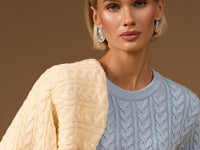
A relaxed women’s wool sweater can be used as a middle layer beneath a coat or worn alone indoors.
The Lightweight Knit Top
A lightweight knit top is useful when moving between outdoor cold and heated indoor spaces.
It can be worn:
- under a cardigan;
- beneath a blazer;
- under a heavier sweater;
- with a skirt or tailored trousers;
- as a transitional-season layer.
A close-fitting base should still allow comfortable movement and should not feel restrictive around the arms or neckline.
The Cardigan
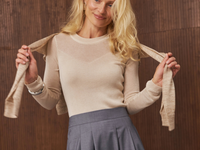
A cardigan offers adjustable warmth because it can be opened, closed, or removed as conditions change.
Shorter cardigans work well with high-waisted trousers and dresses, while longer styles create additional coverage. The best length depends on the proportions of the outfit rather than a fixed fashion rule.
The Knit Dress

A knit dress combines a complete outfit with the comfort of knitted fabric. It can be layered with tights, boots, a coat, and winter accessories.
Look at:
- fabric weight;
- whether the knit becomes transparent when stretched;
- how the dress sits at the shoulders;
- ease of movement;
- length and sleeve design;
- care instructions.
A wool knit midi dress can be styled for everyday wear, work, or informal events depending on the accessories.
The Hooded Scarf
A hooded scarf combines head and neck coverage in one accessory. Warm knitted options work well with coats and jackets, while satin-lined styles provide a smoother surface against the hair.
A hooded scarf can also help reduce the number of separate accessories needed for commuting or travel.
Browse MammyHug hooded scarves.
The Winter Hat
A warm hat remains a practical option when compact head coverage is preferred. It can be paired with a traditional scarf, neck warmer, or coat with a high collar.
MammyHug also offers warm knitted hats alongside its hooded scarf and knitwear collections.
Choosing a Comfortable Fit
Fit should support movement and layering rather than follow an age-based rule.
A relaxed garment needs enough structure to avoid appearing shapeless. A fitted knit should stretch comfortably without becoming overly thin or restrictive.
When reviewing a product, consider:
- shoulder placement;
- sleeve width;
- garment length;
- room around the chest and hips;
- whether a base layer can be worn underneath;
- how the piece sits under a coat.
Body measurements and the individual size chart are more useful than general labels such as oversized, slim, or one size.
Building a Practical Color Palette
A winter wardrobe does not need to consist entirely of neutrals, but a coordinated palette makes pieces easier to combine.
Common foundation colors include:
- ivory;
- beige;
- grey;
- brown;
- navy;
- black;
- olive.
Accent shades such as brick, dusty blue, deep green, or burgundy can add variety without requiring an entirely separate set of accessories.
Choose colors that work with existing coats, shoes, and bags rather than relying only on seasonal trend lists.
Simple Winter Layering Formulas
Everyday City Layering
Combine a lightweight knit top, relaxed sweater, straight trousers, structured coat, and hooded scarf.
Knit Dress Layering
Pair a knit dress with tights, boots, a long coat, and a hooded scarf or knitted hat.
Indoor-to-Outdoor Layering
Wear a lightweight base, cardigan, and weather-appropriate coat. This allows one layer to be removed indoors.
Casual Weekend Layering
Combine a textured sweater, comfortable trousers or jeans, a quilted jacket, and a warm scarf or hood.
The purpose of layering is not simply to add more garments. Each layer should fit comfortably beneath the next without limiting movement.
Knitwear Care
Care instructions vary according to the exact fiber composition and construction.
Before washing:
- read the product label;
- use the recommended water temperature;
- avoid aggressive spinning unless permitted;
- reshape the garment while damp if instructed;
- dry flat when required;
- store heavy knitwear folded rather than hanging.
Friction from bags, coats, and frequent wear can contribute to surface pilling. This is not always a sign of poor quality and can occur with both natural and synthetic fibers.
Frequently Asked Questions
Which knitwear material is warmest?
There is no universal answer. Warmth depends on the fiber, yarn structure, knit density, garment thickness, fit, wind exposure, and layering.
Is natural fiber always better than synthetic fiber?
No. Different fibers serve different purposes. Natural fibers may provide particular comfort or insulation properties, while synthetic fibers can improve durability, shape retention, or care.
What is the most versatile winter sweater?
A midweight sweater in a neutral or frequently worn color is usually easier to layer and combine than an extremely heavy or highly decorative style.
How should knitwear fit under a coat?
The sleeves and shoulders should sit comfortably without bunching. Thick sweaters may require a coat with additional room through the arms and upper body.
Ready to build your winter wardrobe? Browse the full merino wool knitwear and alpaca knitwear collections, or explore cashmere and cotton knitwear for lighter layering options.
Final Thoughts
Good winter knitwear should match real routines. Material matters, but so do construction, fit, garment weight, care, and compatibility with the rest of the wardrobe.
A practical collection may include a warm sweater, a lighter layering top, a cardigan or knit dress, and suitable winter accessories. Reviewing the exact composition and measurements of each piece provides more useful information than relying on broad claims such as “the best” or “the warmest.”