Why Women Are Buying Fewer Clothes in 2026 - and Choosing Better Ones
Fashion has always changed. What feels different in 2026 is not that women have stopped caring about style, but that many are becoming more selective about what deserves a place in their wardrobes.
After years of constant newness - frequent collections, micro-trends, social-media-driven purchases and seemingly endless choice — the question is becoming less about what to buy next and more about what is actually worth buying.
This does not mean everyone is embracing minimalism or giving up on fashion. Far from it. Style still matters. Individuality still matters. But increasingly, so do usefulness, comfort, quality and longevity.
The shift is simple: fewer purchases need to do more.
From More Choices to Better Choices
For years, fashion encouraged constant discovery.
There was always another trend, another color, another silhouette, another reason to refresh a wardrobe. The speed made fashion exciting, but it also made buying easier than choosing.
By 2026, consumers are approaching discretionary spending more carefully. The State of Fashion 2026 from The Business of Fashion and McKinsey describes shoppers as increasingly value-conscious, with greater attention being paid to quality, craftsmanship and durability.
That change affects the way people look at clothing.
A piece does not have to be completely timeless. It does not have to work for every possible occasion. But it increasingly has to justify its place in the wardrobe.
Can it be worn regularly?
Does it work with clothes already owned?
Will it still feel relevant next season?
Is it comfortable enough to reach for again and again?
Those questions naturally lead to more considered purchases.

Trend Fatigue Doesn’t Mean the End of Trends
There is nothing inherently wrong with trends. They make fashion interesting, introduce new proportions and colors, and give people new ways to express themselves.
The problem comes when keeping up becomes the goal.
The rise of rapid trend cycles has made it possible for something to feel new, become ubiquitous and disappear again within a remarkably short period of time. That can leave wardrobes full of pieces that were appealing in the moment but never became part of everyday life.
A more selective approach looks different.
Instead of asking, “Is everyone wearing this right now?” the better question may be:
“Would I still want to wear this if I stopped seeing it everywhere?”
That small shift separates personal style from constant consumption.
Price Is Only One Part of Value
A low price can be appealing, but price alone does not determine whether something was a good purchase.
A garment that is uncomfortable, difficult to style or rarely worn may offer very little value regardless of what it cost.
This is where the idea of cost per wear becomes useful.
Imagine one piece that costs more initially but becomes part of a weekly rotation. Compare it with several less expensive purchases that are worn once or twice before being forgotten.
The more expensive item may ultimately deliver far more value.
Of course, quality is not automatically guaranteed by a higher price tag. A premium price is only meaningful when it is supported by something tangible: better construction, thoughtful design, useful details, comfortable materials or greater durability.
Choosing better is not the same as simply choosing more expensive.
It means paying attention to what you are actually getting for the price.
Comfort Has Become Part of Good Design
For a long time, fashion often treated comfort and style as competing priorities.
That distinction makes less sense for the way many women live today.
A normal day can involve commuting, working, walking, driving, sitting for hours, moving between indoor and outdoor spaces, running errands and meeting people — sometimes without an opportunity to change clothes in between.
Clothing has to function through those transitions.
That does not mean everything needs to resemble loungewear. It means good design should consider how a piece feels when it is actually being worn.
Does it allow easy movement?
Does it require constant readjustment?
Can it be layered comfortably?
Will you still want to wear it after several hours?
These details may sound practical rather than fashionable, but they often determine which pieces become wardrobe favorites.
A beautiful garment that is consistently uncomfortable usually stays in the closet.
A beautiful garment that also feels natural to wear has a much better chance of becoming part of real life.

Versatility Is Becoming More Valuable Than Novelty
One of the easiest ways to buy less is to expect more versatility from individual pieces.
That does not mean creating a wardrobe made entirely of neutral basics. Versatility is not about making clothing boring.
It is about choosing pieces that can move between different parts of life.
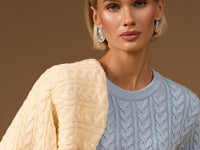
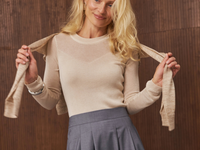
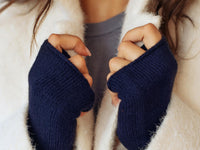
A cardigan can work over a dress, with denim or as an extra layer while traveling. A well-designed accessory can change the warmth, coverage or character of an existing coat. A hooded scarf can add a hood to outerwear that does not have one while functioning as part of the outfit rather than as a separate technical layer.
The useful question becomes:
How many realistic ways can I wear this with what I already own?
When a new piece creates several combinations instead of requiring several additional purchases, the wardrobe becomes more flexible without becoming larger.
Practicality Can Be Part of Personal Style
Practical clothing is sometimes treated as the opposite of expressive clothing.
It does not have to be.
A piece can solve a real problem and still have personality. It can provide warmth without feeling bulky, offer coverage without looking purely functional, or make an everyday outfit feel more considered without demanding complicated styling.
This is especially relevant for accessories and layering pieces.
The most useful designs often earn their place because they answer a specific need while still feeling like something the wearer genuinely wants to put on.
That balance between function and appearance is becoming increasingly important.
People are not necessarily looking for wardrobes without beautiful or unusual pieces. They are looking for beauty that works harder.
Fewer Impulse Purchases, More Intentional Ones
Another part of buying less is simply creating more distance between seeing something and buying it.
Online shopping has made that distance extremely short.
A product can move from discovery to checkout in minutes. Sometimes that convenience is useful. Sometimes it leaves little opportunity to consider whether the item fits an actual need.
A more intentional purchase does not require weeks of deliberation. It may simply mean asking a few practical questions before checkout:
-
What would I wear this with?
-
Where would I realistically wear it?
-
Do I already own something that serves the same purpose?
-
Am I drawn to the piece itself, or mainly to the way it is being presented?
-
Would I still choose it without a discount or countdown timer?
The goal is not to remove emotion from fashion. Clothing is personal, and sometimes the fact that something brings joy is reason enough to own it.
The difference is choosing that joy deliberately rather than automatically.

“Better” Looks Different for Everyone
There is no universal definition of a better wardrobe.
For one woman, better may mean natural fibers. For another, easy-care materials matter more.
One person may prefer a small wardrobe built around neutral colors. Someone else may wear bold colors, unusual silhouettes and statement accessories every day.
One may prioritize locally made garments. Another may care most about durability, fit or the ability to wear something across several seasons.
The point is not to establish another rigid set of fashion rules.
It is to become clearer about your own criteria.
Once you understand which shapes you actually wear, which materials you enjoy, which colors work with the rest of your wardrobe and which features make everyday dressing easier, many purchases become easier to evaluate.
You stop buying for an imagined version of your life and start buying for the one you actually have.
A Wardrobe That Asks Less of You
Perhaps the most appealing part of this shift is not simply owning fewer things.
It is owning fewer things that create friction.
Fewer pieces waiting for the “right occasion.”
Fewer garments that only work with one specific outfit.
Fewer purchases that seemed exciting online but never felt quite right once they arrived.
And more pieces that quietly earn their place through repeated wear.
That is where slow fashion becomes practical rather than ideological.
It does not require rejecting trends, counting every item in your closet or building a perfectly minimalist wardrobe. It can simply mean slowing down enough to recognize the difference between wanting something new and finding something genuinely useful, beautiful and worth keeping.
In 2026, that distinction matters more than ever.
Fashion can still be expressive, playful and personal.
There may simply be less need for more of it.