Fresh From the Salon, Caught in the Rain: How to Protect Your Hair and Makeup
The salon bill is paid. The appointment took time. Your blowout, curls, styling, or makeup is finished for dinner, a date, a wedding, a meeting, a photo shoot, or another important plan. Then the first drops hit the pavement.
This is not simply a question of keeping hair dry. It is about protecting the time, money, and effort already invested in a finished look. The right response adds coverage without pressing the hairstyle flat or turning a considered outfit into an emergency improvisation.
A waterproof hood can help reduce direct exposure around the hair, brow, and upper-face area. For steady or heavy rain, use it with an umbrella for broader protection. No accessory, however, can guarantee that hair or makeup will remain perfect in every condition.
Why Post-Salon Rain Feels So Personal
Unexpected rain is inconvenient on any day. After a salon appointment, it threatens a result you have already paid for.
The investment is not only financial. It includes booking the appointment, traveling across town, sitting through the service, coordinating makeup and clothes, and planning the rest of the day around the finished look. If you are heading to dinner, a wedding, a date, a presentation, or a camera-facing moment, there may be little time to start again.
What matters is the complete impression: the lift of a blowout, the shape of curls, smoothness around the crown, the placement of face-framing pieces, makeup near the brow, and the way all of it works with the coat and accessories you chose.
That is why the solution has to respect the look rather than merely cover the head.
And once you are on your way, there may be little time—or opportunity—to recreate a professional finish before you arrive. The emotional sting comes from watching a finished result become vulnerable just after the investment has been made.
That does not mean treating the hairstyle as too precious to live in. It means planning the exposed part of the journey with the same care used to choose the dress, coat, shoes, or jewelry. Weather preparation becomes part of the styling—not an admission that the outfit has failed.
A Calm Plan Between the Salon and Your Destination
1. Pause Under Cover
Use the salon doorway, lobby, or awning as a preparation zone. Arrange your rain layer before stepping outside, while you can still see and feel how it sits. Rushing into the shower and adjusting everything on the pavement is how an already stressful moment becomes chaotic.
2. Choose Space, Not Pressure
Set the hood around the hairstyle instead of pulling it tightly over the crown. Look for visible depth at the back and sides so a blowout, curls, braids, twists, locs, thick hair, or another full style does not have to be compressed to fit.
The side view matters. It shows whether “oversized” means usable room or only a wide opening around the face.

A side view makes the hood depth and loose silhouette easier to judge. Product shown: MammyHug SKU 8009.
3. Add Front Coverage Carefully
Wind can direct rain toward the forehead, brows, and sides of the face. A deeper hood can be positioned farther forward to add physical coverage and help reduce direct exposure around the upper face. Keep your line of sight clear, especially near traffic, steps, and crowded streets.
For a longer walk or heavier shower, open an umbrella as well: the hood stays close to the head and neck, while the umbrella covers a wider area. Once indoors, lift the hood away slowly. If a few drops reached the face, blot rather than rub across makeup.
If you expect a quick touch-up, a tissue and the one makeup item you would realistically use are usually enough.
Why the Usual Rain Solutions Can Feel Wrong
An umbrella is excellent for broad coverage, but angled rain can still reach the sides of the head. It can also be awkward when entering a taxi, opening a door, handling luggage, or carrying a bag.
The compact hood built into a coat creates a different problem. It may look streamlined when lowered but leave too little interior space when raised, pressing on volume or shifting face-framing pieces. It can also change the mood of a tailored outfit at exactly the moment you want to look composed.
A separate hooded scarf adds the weather function without asking you to replace the trench, coat, or jacket you planned to wear.
What the Right Hood Needs to Do
Start with the exterior claim. Waterproof, water-resistant, and rain-ready are not interchangeable. The live record for MammyHug SKU 8009 confirms a waterproof polyester outer shell, supporting its use as physical rain coverage without promising that every strand or area of makeup will remain untouched.
Inside, the product has a smooth satin lining. Compared with a rougher fabric, this helps reduce friction, static, and hair disturbance. It is a hair-conscious construction detail—not a guarantee against frizz, movement, or damage.
The extended neckline adds head-and-neck coverage, while the included storage pouch and small carabiner make the hood practical to carry when a dry morning may turn into a wet afternoon. The point is not to pack more “just in case” items; it is to have one considered layer ready before the weather changes.
Make It Part of the Outfit
Rainwear looks most elegant when it has already been considered with the clothes underneath.
With a trench, keep the belt and lapels visible so the coat retains its clean vertical line. With a tailored coat, balance the hood’s volume against a simple silhouette below. The verified black SKU 8009 works naturally with camel, navy, grey, denim, or tonal black outerwear. With a city jacket, keep the palette restrained and let the hood frame the face.
Proportion matters more than matching every color exactly. A larger shape around the head looks intentional when the coat below has a clear line and the accessories do not compete for attention. If the neckline feels crowded, move the hooded-scarf section inside the coat; if the lapels need more structure, let it sit cleanly above them. The best position is the one that preserves both the hairstyle and the character of the outerwear.

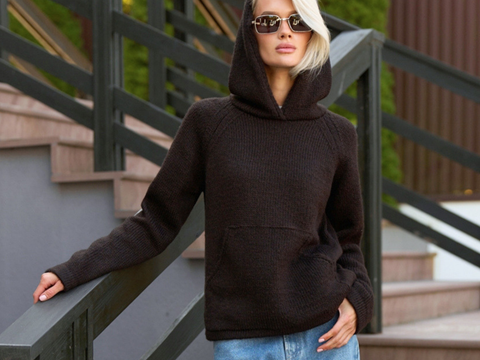
The black hood reads as an intentional urban layer with denim while leaving visible room around the hair.
Before an important day, try the complete combination—hairstyle, hood, coat, earrings, and bag—from the front and side. Check the face framing, neckline, and peripheral vision. That small rehearsal is what makes the layer feel like fashion rather than emergency gear.
The Moments When It Earns Its Place
This approach is especially useful for short, exposed transitions:
- leaving a blowout or styling appointment;
- going from a hotel or home to dinner;
- arriving as a wedding guest;
- commuting to a meeting or presentation;
- crossing between a station, taxi, and office;
- reaching a photo shoot or date-night venue.
These are not expeditions. They are the few minutes between the finished look and the place where it matters.
The destination changes the emphasis. A wedding guest may care most about keeping an updo and earrings undisturbed. Before a meeting, the priority may be arriving composed without stopping for a long reset. On date night or before a photo shoot, face framing and makeup near the brow may matter most. Thinking about the actual destination keeps the solution personal rather than purely technical.
Protect the Look You Already Chose
MammyHug’s Oversized Satin-Lined Waterproof Rain Hood for Curly Hair combines the verified waterproof polyester shell, smooth satin lining, oversized construction, extended neckline, storage pouch, and small carabiner in one separate layer.
It cannot control the forecast or guarantee perfect hair and makeup. It can add coverage while respecting the volume and styling choices already in place—helping protect the value of the finished look rather than asking you to hide it under a tight hood.
For more options, explore Waterproof Hooded Scarves. If your main question is about curls, coils, or textured hair in wet weather, read How to Protect Natural Hair from Rain with a Hooded Scarf.
View the Oversized Satin-Lined Waterproof Rain Hood
Frequently Asked Questions
What should I do if it starts raining immediately after my salon appointment?
Pause under cover and arrange your rain layer before stepping outside. Avoid pressing it tightly over the hairstyle. For steady or heavy rain, add an umbrella; when you arrive, remove the hood slowly and blot any moisture from the face.
Can this hood guarantee makeup protection?
Its oversized hood can be positioned forward to add physical coverage around the brow and upper-face area, helping reduce direct exposure to rain. Protection will vary with rain, wind, fit, movement, and the makeup itself.
What should I look for over a blowout or curls?
Prioritize visible depth around the crown, sides, and back; a verified wet-weather exterior; a smooth interior; and a silhouette that works with the outerwear you plan to wear.
Can a separate rain hood work with a tailored outfit?
Yes. Test the proportions in advance, keep the coat’s defining lines visible, and choose a hood color and shape that feel deliberate with the full look.